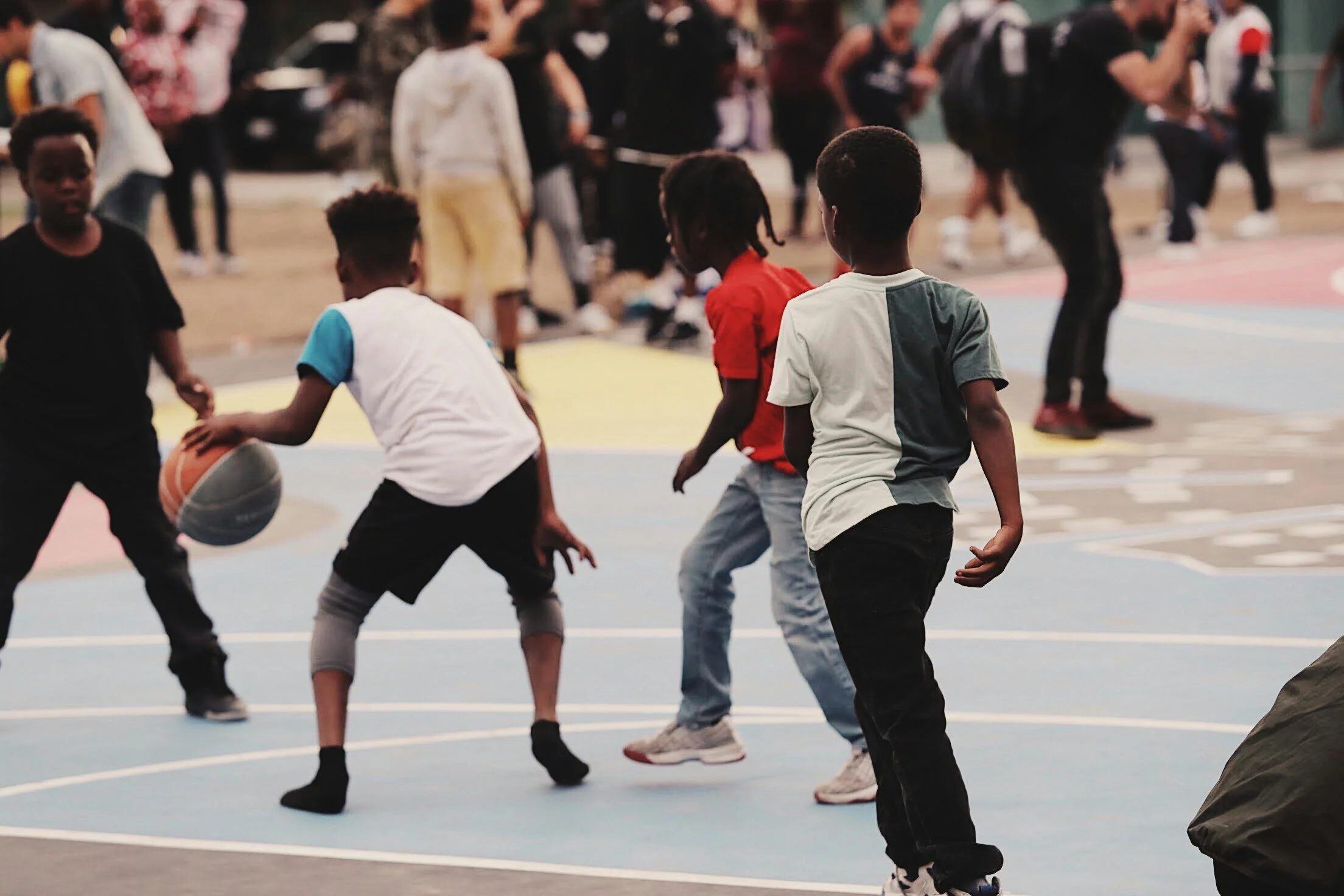
Afterschool hours can be a missed opportunity for many adolescents—especially those in underresourced, urban neighborhoods—to accumulate daily physical activity and positive social experiences. R.E.A.C.H. (Reflective Educational Approach to Character and Health) offers a solution that blends basketball, fitness, literacy, and character education in a single, student-centered program. Below is a look at some key findings from a research project I conducted, its discussion of impact, and major takeaways for practitioners.
What the Article Investigated
Rather than reporting experimental data, we present R.E.A.C.H. as an actionable model for physical educators and community leaders. We detail why an afterschool approach is critical—Black and Hispanic youth are less active than their White peers and seldom meet 60 minutes of daily MVPA—and they outline how basketball can serve as an engaging “hook” to draw students into broader skill building experiences.
Core Program Components (Results in Practice)
Although labeled “results,” the article’s outcomes are programmatic rather than statistical. Here are some highlights:
5:1–8:1 instructor to student ratio—supports personal attention and family like climate.
Dual station model (basketball + fitness)—students rotate between skill instruction and functional exercises using jump ropes, resistance bands, and bodyweight movements.
Weekly reflection sheets—students set PA goals, log healthy eating, and define a word of the week (e.g., “commitment,” “culture”) that reappears in team discussions during sessions.
Progressive game play—structured 1v1 games that progress eventually to 5v5 games teach roles and strategy as competence grows.
Literacy integration—instructors comment on reflections, reinforcing vocabulary and critical thinking while monitoring social emotional needs.
These design choices produce visible benefits reported anecdotally: increased school connectedness, leadership, and adherence to 60 minutes of activity through fun, culturally relevant content.
Discussion Highlights
R.E.A.C.H. is framed within Positive Youth Development (PYD). The program’s goals, atmosphere, and activities intentionally cultivate the PYD “5 Cs”: competence, confidence, connection, character, and caring. By embedding reflective writing and small-group dialogue into a sport students already love, R.E.A.C.H. sidesteps a common PE challenge where youth want to “just play basketball” while teachers want broader curricula. Here, basketball is the curriculum’s backbone, which is then leveraged to expand vocabulary, conflict resolution skills, and health literacy.
In addition, the authors argue that an afterschool setting enhances Comprehensive School Physical Activity Programs (CSPAPs). By reinforcing concepts from school PE, modeling collaborative staff involvement, and providing affordable supervision, R.E.A.C.H. meets multiple stakeholders’ needs: parents gain safe childcare, administrators see stronger academic engagement, and youth accumulate meaningful MVPA.
Five Key Takeaways for Practitioners
Interest-Driven Design Works. Embrace the sports and activities students already love as gateways to deeper learning. Basketball was not a distraction—it was the conduit.
Small Ratios Matter. A 5:1–8:1 participant ratio fosters trust, rapid feedback, and individualized skill progressions. This can also be accomplished through brining in high school students to mentor/support elementary or middle school students if paid positions are a burden.
Integrate Literacy and Reflection. Weekly writing tasks and “word of the week” discussions seamlessly connect physical, cognitive, and social domains.
Progressive Skill Challenges Keep Engagement High. Moving from form shooting to full-court games ensures continuous mastery experiences, aligning with Self-Determination Theory’s competence need.
After-School Programs Can Extend CSPAP Impact. Structured, strength-based initiatives like R.E.A.C.H. reinforce PE lessons, close activity gaps among underserved youth, and support holistic development beyond the regular school day.
Final Thoughts
While the article does not present quantitative efficacy data, its rich program blueprint and anecdotal successes make R.E.A.C.H. a compelling template for schools seeking to merge physical activity with character and academic growth. By viewing after-school time as a second classroom, educators can turn a beloved sport into a multidimensional platform for healthier, more connected, and more reflective young people.
Full Article:
Marttinen, R., & Fredrick. R. (2017). R.E.A.C.H: A case for after school physical education. Strategies, 30(1), 8-14. https://doi.org/10.1080/08924562.2016.1251862
This blog post was written with the assistance of AI to support clarity and accessibility. It is intended to help disseminate and discuss research findings with a broader audience. However, for the most accurate and reliable information—including conclusions and practical applications—please refer to the original peer-reviewed publication on which this blog is based. The peer-reviewed article remains the most authoritative source.