
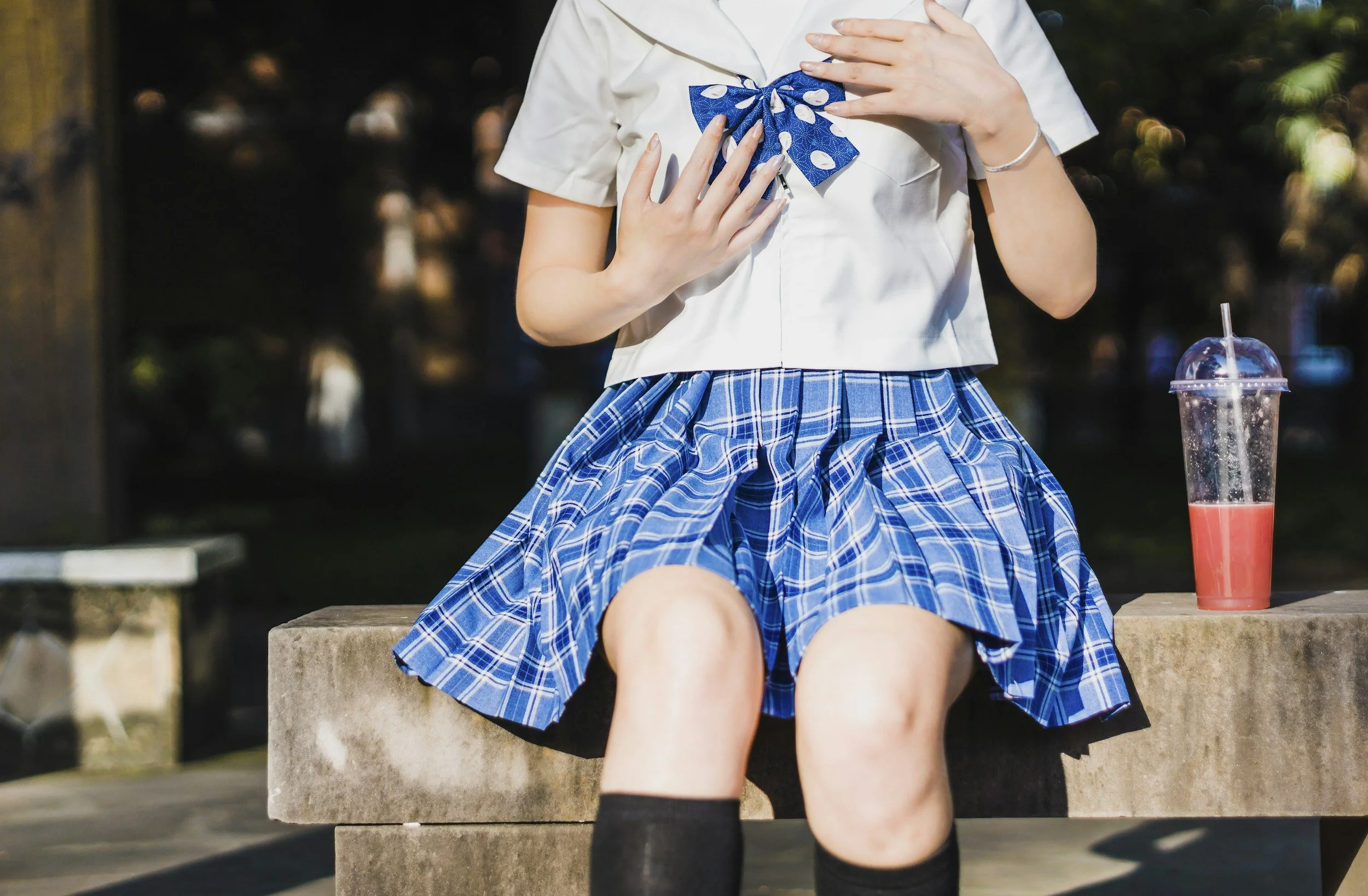
There's a paper making the rounds in HPE circles with a title that stops you mid-scroll: "Let Us Wear Our Own Goddamn Clothes." It's not clickbait — those are the words of a real secondary school student, captured in qualitative data, expressing a frustration that turns out to be far more widespread than many practitioners may have assumed.
Dr. Brendan O'Keeffe from the University of Limerick, along with colleagues Caera Grady, Fiona McHale, and Elaine Murtagh, set out to do something deceptively simple: gather empirical evidence on whether school uniforms act as a barrier to PE participation and physical activity among secondary school students in Ireland. What they found has direct implications for HPE teachers, school leaders, and anyone who has a hand in shaping the school day.
The Study
The research surveyed over 1,400 secondary school students across 18 schools in Ireland, including co-educational, all-boys, and all-girls settings. It was a mixed-methods design — combining quantitative survey data with rich open-ended responses — which gave the team both the numbers and the nuance. The data on uniforms emerged from a broader longitudinal study on students' attitudes toward PE, with specific questions about uniform added to capture a gap in the existing literature. Most prior research had focused on primary-age students; this study deliberately targeted adolescents, where the stakes around body image, autonomy, and social dynamics are considerably higher.
What the Data Said
The headline findings are hard to ignore. Over half of students reported that wearing a school uniform was a barrier to participating in PE, and close to 60% said it limited their general physical activity throughout the school day. For O'Keeffe and his team, these numbers were not entirely surprising — the anecdotal evidence from PE teachers and subject associations had been pointing in this direction for years. What the study provided was the empirical foundation to act on it.
The qualitative responses added important context. When students were asked about the least enjoyable aspect of their PE experience, the most commonly cited item was not the activities, the facilities, or even the assessment — it was the school uniform, and specifically the changing room experience that comes with it. Of the 219 responses related to uniform, approximately 80% came from girls. Boys tended to focus their feedback on activity preferences — more football, more basketball — while girls more frequently raised concerns about the environment of participation itself. Uniform design, in particular, was identified as a tangible constraint: long skirts, leather shoes, and formal dress codes that are simply not conducive to movement, whether that's a lunchtime game of basketball or cycling to school.
The Age Factor
Senior cycle students — those in their final two years of secondary school, typically aged 16 to 18 — were significantly more likely than junior cycle students to perceive uniforms as a barrier. This tracks developmentally. As students move through adolescence, concerns around body image, autonomy, and social presentation intensify. The desire for more control over their own appearance is not defiance; it is a normal and well-documented part of adolescent development. For practitioners, this means the uniform question becomes increasingly urgent as students get older — exactly the point at which retaining PE engagement is most challenging.
The Changing Room Problem
The changing room emerged as its own distinct issue. For many students, having to change before and after PE in a shared, open space is a genuine source of anxiety, particularly at senior cycle. A few students in the qualitative data raised the idea of partitioned spaces — a relatively low-cost structural change that could meaningfully reduce that discomfort. One of the study's most practical findings was that allowing students to wear their PE kit for the entire day on scheduled PE days would not only increase their comfort but also reclaim instructional time. Students routinely spend 5 to 10 minutes at either end of a lesson changing — time that, in many schools, is simply lost.
What Practitioners and School Leaders Can Do
The Physical Education Association of Ireland released a position statement in response to the study's findings, outlining four key recommendations. First, students should be permitted to wear a designated PE or activity-enabling uniform on days when they have timetabled PE. Second, school management should actively review whether the school uniform — not just the PE kit — is designed in a way that allows students to move freely throughout the day. Third, and critically, students themselves should be consulted in decisions about uniform design, particularly regarding the PE kit. Fourth, school management should review both the physical design of changing room facilities and the protocols governing how students enter and exit the PE space.
None of these recommendations require a full infrastructure overhaul. They require conversations — between PE departments and school leadership, between teachers and students, and increasingly between schools and the research community that is building the evidence base for exactly these kinds of changes.
The Bigger Picture
O'Keeffe is careful to stress that the study is not a call to abolish school uniforms. Uniforms serve real purposes, including reducing socioeconomic visibility around clothing and creating a sense of community identity. The argument is not against the uniform itself — it is about design, flexibility, and student voice. An activity-enabling uniform that allows a student to cycle to school, join a lunchtime run, or participate fully in a PE lesson is not a radical ask. It is a reasonable and evidence-supported one.
For HPE teachers navigating this in their own schools, the most actionable takeaway may be the simplest: start with the students. Ask your senior cycle classes what barriers they experience. Bring what you hear to school management — with the research to back it up. The evidence is now there. The question is whether we use it.
Full Article:
O’Keeffe, B. T., Grady, C., McHale, F., & Murtagh, E. (2026). ‘Let us wear our own Goddamn clothes’: Students’ perceptions of school uniform as a barrier to physical activity and physical education participation in schools. European Physical Education Review, 1356336X261422164.
This blog post was written with the assistance of AI to support clarity and accessibility. It is intended to help disseminate and discuss research findings with a broader audience. However, for the most accurate and reliable information—including conclusions and practical applications—please refer to the original peer-reviewed publication on which this blog is based. The peer-reviewed article remains the most authoritative source.